Container weight: tare, gross and payload of 17 types
Empty, a shipping container weighs about 2,230 kg (20 ft), 3,700 kg (40 ft) and 3,865 kg (40 ft high cube): that is its tare. Full, it is allowed up to the maximum gross marked on the doors (30,480 or 32,500 kg for most data sheets); tare subtracted from that figure gives the payload. On this page: 17 types weighed, a number checker that also decodes the size-type code, and a calculator for a loaded box.
Updated 17 Nov 2026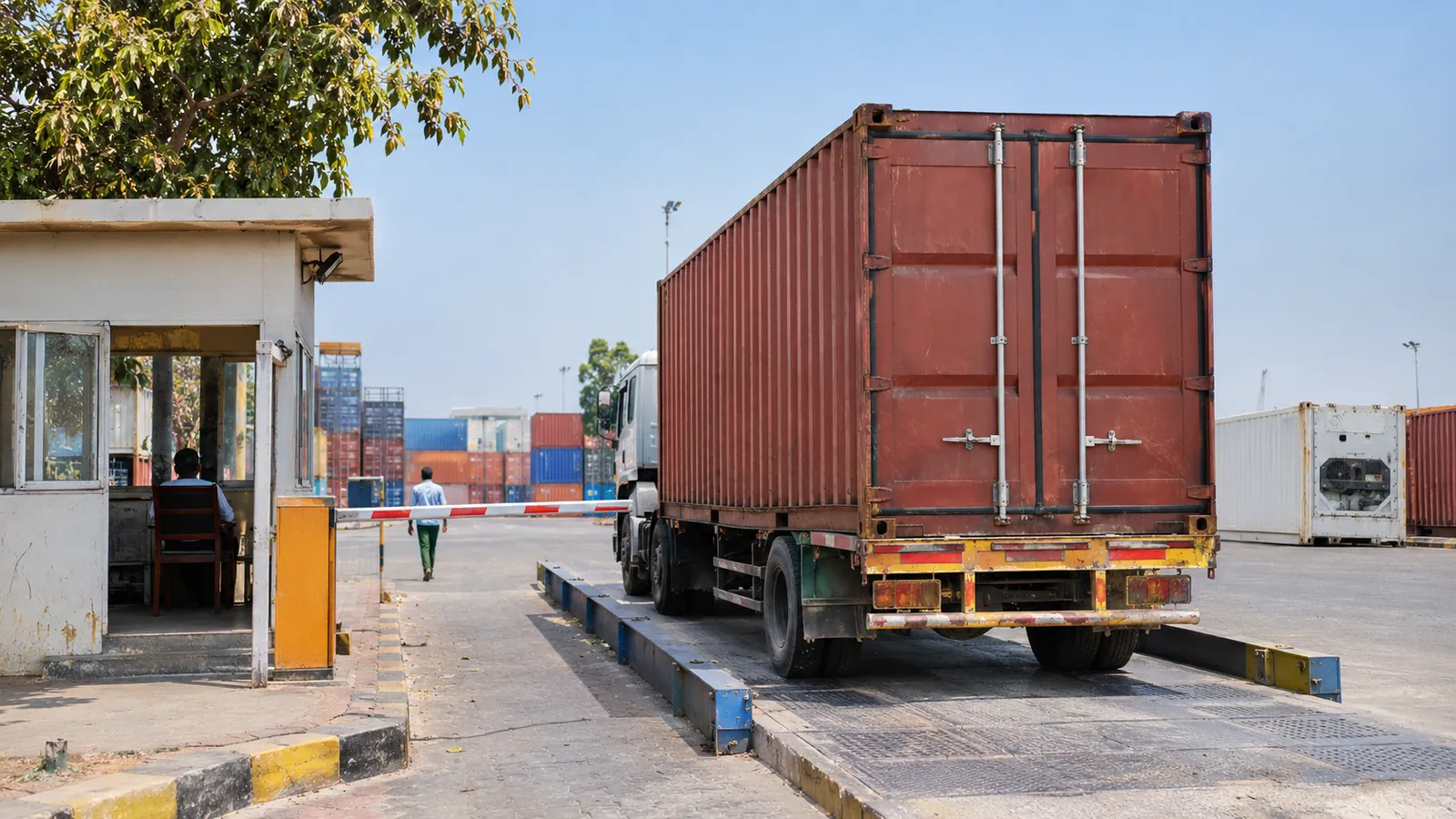
Weight of each container type
| Code | Box | Typical tare | Tare range | Gross rating | Payload |
|---|---|---|---|---|---|
| 12G1 | 10 ft container | 1,300 kg | 1,200–1,700 kg | 10,160–12,000 kg | 8,460–10,800 kg |
| 22G1 | 20 ft standard container | 2,230 kg | 2,120–2,350 kg | 30,480–32,500 kg | 28,130–30,380 kg |
| 25G1 | 20 ft high cube container | 2,230 kg | 2,230 kg | 30,480 kg | 28,250 kg |
| 42G1 | 40 ft standard container | 3,700 kg | 3,630–4,000 kg | 30,480–32,500 kg | 26,480–28,870 kg |
| 45G1 | 40 ft high cube container | 3,865 kg | 3,700–4,200 kg | 30,480–32,500 kg | 26,280–28,800 kg |
| L5G1 or 55G1 | 45 ft high cube container | 4,750 kg | 4,650–4,900 kg | 30,480–32,500 kg | 25,580–27,850 kg |
Typical tare: median across the data sheets of lines, lessors and makers read on 20 October 2026. Ranges: the smallest and largest figures in those sheets; payload is max gross less tare, over the same range. Only one data sheet for: 20 ft HC. For one particular box, read the tare and max gross painted on its doors; the max gross also appears on the CSC plate.
Special boxes: reefers, open tops, flat racks, open sides, double doors (11 types)
| Code | Box | Typical tare | Tare range | Gross rating | Payload |
|---|---|---|---|---|---|
| 22R1 | 20 ft reefer container | 2,920 kg | 2,480–3,080 kg | 30,480–32,000 kg | 27,400–29,520 kg |
| 45R1 | 40 ft high cube reefer container | 4,505 kg | 4,330–4,760 kg | 34,000–35,000 kg | 29,240–30,670 kg |
| 22U1 | 20 ft open top container | 2,245 kg | 2,170–2,450 kg | 30,480–32,500 kg | 28,030–30,330 kg |
| 42U1 | 40 ft open top container | 3,880 kg | 3,800–4,060 kg | 30,480–32,500 kg | 26,420–28,700 kg |
| 45U1 or 45U6 | 40 ft high cube open top | 3,915 kg | 3,860–4,260 kg | 30,480–32,500 kg | 26,220–28,640 kg |
| 22P1 or 22P3 | 20 ft flat rack | 2,890 kg | 2,750–3,100 kg | 34,000–45,000 kg | 30,900–42,250 kg |
| 42P1 or 42P3 | 40 ft flat rack | 5,025 kg | 4,900–6,200 kg | 45,000–52,500 kg | 38,800–47,600 kg |
| 45P1 or 45P3 | 40 ft high cube flat rack | 5,300 kg | 5,000–6,250 kg | 50,000–58,600 kg | 43,750–53,600 kg |
| 22G2 or 22G3 | 20 ft open side container | 3,190 kg | 3,000–3,200 kg | 24,000–30,480 kg | 20,800–27,480 kg |
| 22G0 or 22G1 | 20 ft double door container | 2,277 kg | 2,200–2,340 kg | 30,480 kg | 28,140–28,280 kg |
| 42G0 or 42G1 | 40 ft double door container | 3,580 kg | 3,500–4,000 kg | 30,480 kg | 26,480–26,980 kg |
Typical tare: median across the data sheets of lines, lessors and makers read on 20 October 2026. Ranges: the smallest and largest figures in those sheets; payload is max gross less tare, over the same range. For one particular box, read the tare and max gross painted on its doors; the max gross also appears on the CSC plate.
Treat these as type weights, not your box’s: sheets for the same type differ by a few hundred kilograms, 3,700 to 4,200 kg for a 40 ft high cube. The extra foot of a high cube costs only 165 kg. A reefer carries its cooling machinery and foam-filled walls, 690 kg more than a dry 20 ft (reefer container). The heaviest boxes in the tables are the 40 ft flat racks, 5,025 kg and 5,300 kg for the high cube version, and flat racks are rated far above the ISO figure, up to 58,600 kg on the sheets, because their floor and side rails take the whole load (flat rack container).
Empty container weight in kg, and a full one
| Box | Empty | Maximum gross | Goods it can take |
|---|---|---|---|
| 10 ft | 1,300 kg | 10,160 kg in ISO 668; 12,000 kg on some makers’ sheets | 8,860 to 10,700 kg |
| 20 ft | 2.2 tonnes | 30,480 or 32,500 kg on most sheets, about 30.5 to 32.5 tonnes | 28,250 to 30,270 kg |
| 40 ft | 3.7 tonnes | the same rating | 26,780 to 28,800 kg: no more than a 20 ft |
| 45 ft high cube | 4,750 kg | 30,480 or 32,500 kg | 25,730 to 27,750 kg |
What each standard box’s weight means on delivery day: 20 ft container weight, 40 ft container weight, 40 HC container weight.
Container tare weight, gross weight and payload explained
| Term | Meaning |
|---|---|
| Tare weight (empty) | the steel box with nothing in it: the figure a crane or forklift has to lift when an empty box is delivered |
| Maximum gross mass (MAX GROSS, the rating) | the ceiling for box plus contents. For 20 ft and 40 ft boxes ISO 668 stood at 30,480 kg (67,200 lb) for years; the 2022 amendment raised the limit to 36,000 kg for all sizes except the 10 ft. Each box is still bound by the rating stamped on its CSC safety approval plate |
| Payload | the rating less the tare: the most that may go in. Not the net weight of the goods, which leaves the packing out |
| Gross weight of a loaded box | tare plus goods, packing, pallets and lashings: the verified gross mass (VGM) a shipper declares before the box sails |
Markings come in kilograms and pounds. A pound is 0.4536 kg, and ISO 668’s 30,480 kg is 67,200 lb rounded; a tonne is 1,000 kg.
How to find a container’s tare weight
| Where | What you find |
|---|---|
| On its doors | the box’s own maximum gross and tare, in kg and lb, in characters at least 50 mm high as ISO 6346 requires; many boxes add the payload |
| On its CSC plate | the maximum operating gross mass, the stacking weight and the racking test load, but never the tare (inspecting a used container reads the plate line by line) |
| From its owner | each shipping line’s tare search covers its own fleet only, so boxes sold off that fleet may be missing; paid databases span many owners |
| On a weighbridge | if paint hides the markings: weigh the truck with the box, then without, and subtract |
Weight finder: container number and type code
Enter all 11 characters, four letters followed by seven digits; number and code can be pasted in one go.
Enter the 4-character code painted below or next to the number.
Your browser computes the check digit with the ISO 6346 formula; nothing leaves the page. Weights shown are the data-sheet figures for that type of box; the exact ones for your box are on its doors, in kg and lb.
Every container number has 11 characters. Letters one to three identify the owner, whose code is on the register of the Bureau International des Containers (BIC); letter four is U on a freight container; then come seven digits. The final digit is a check digit, computed from the ten characters before it: a mismatch means the number was misread, mistyped or made up, which is worth finding out before paying. Passing the check means a valid format, nothing more: neither that such a box exists nor that it belongs to the seller, so match it against the box itself, on site or on a video call (checking a container supplier). The size-type code near the number gives length, height and type: 22G1 for a standard 20 ft, 45G1 for a 40 ft high cube, 22R1 for a 20 ft reefer (size and type codes).
Container gross weight calculator (VGM)
—
Type how much the goods weigh.
Tare + cargo + packing gives the gross mass; with cargo and packing weighed, that is the VGM a shipper declares by method 2. Picking a type pre-fills its typical tare and the lowest max gross in its data sheets, unless you typed figures yourself; the ones painted on your box are best. ISO 668 has permitted 36,000 kg since 2022, yet no box may exceed its own plate.
Verified gross mass (VGM) in India
From 1 July 2016, no packed container goes aboard a ship in India without the shipper’s declared VGM (Merchant Shipping Notice 4 of 2016). Method 1 weighs the packed box itself, on a weighbridge certified under Legal Metrology law; method 2, where approved, adds the weighed contents to the tare. Above its CSC plate’s rating, a box is refused. The rule is about ships: a box moving only by road needs no VGM.
On the road and at delivery
- The lift: the tare sizes the lifting gear, and crane, side-lifter or forklift each need a margin above it; forks only for 10 ft and 20 ft boxes with fork pockets.
- Setting down: the box rests on its four bottom corner castings, never on its side rails (foundation and unloading).
- Fitted-out boxes: insulated, panelled and furnished, an office or a home weighs well over its tare; get the figure from the converter before booking the crane.
- Before packing: Indian roads weigh the whole rig. Tractor, semi-trailer and load together may not pass 55 tonnes, nor what the axles are rated for (2018 axle-load notification), so agree the number of axles with the transporter before the goods go in.
More size guides
Published 17 November 2026. Weights: median and spread of the data sheets of lines, lessors and makers we read on 20 October 2026. Rules checked on 26 October 2026: the two ISO standards on marking (6346, 2022 edition) and sizes (668, 2020 with its 2022 amendment), the CSC convention, IMO's VGM guidelines, Merchant Shipping Notice 4 of 2016 and India's 2018 axle loads.